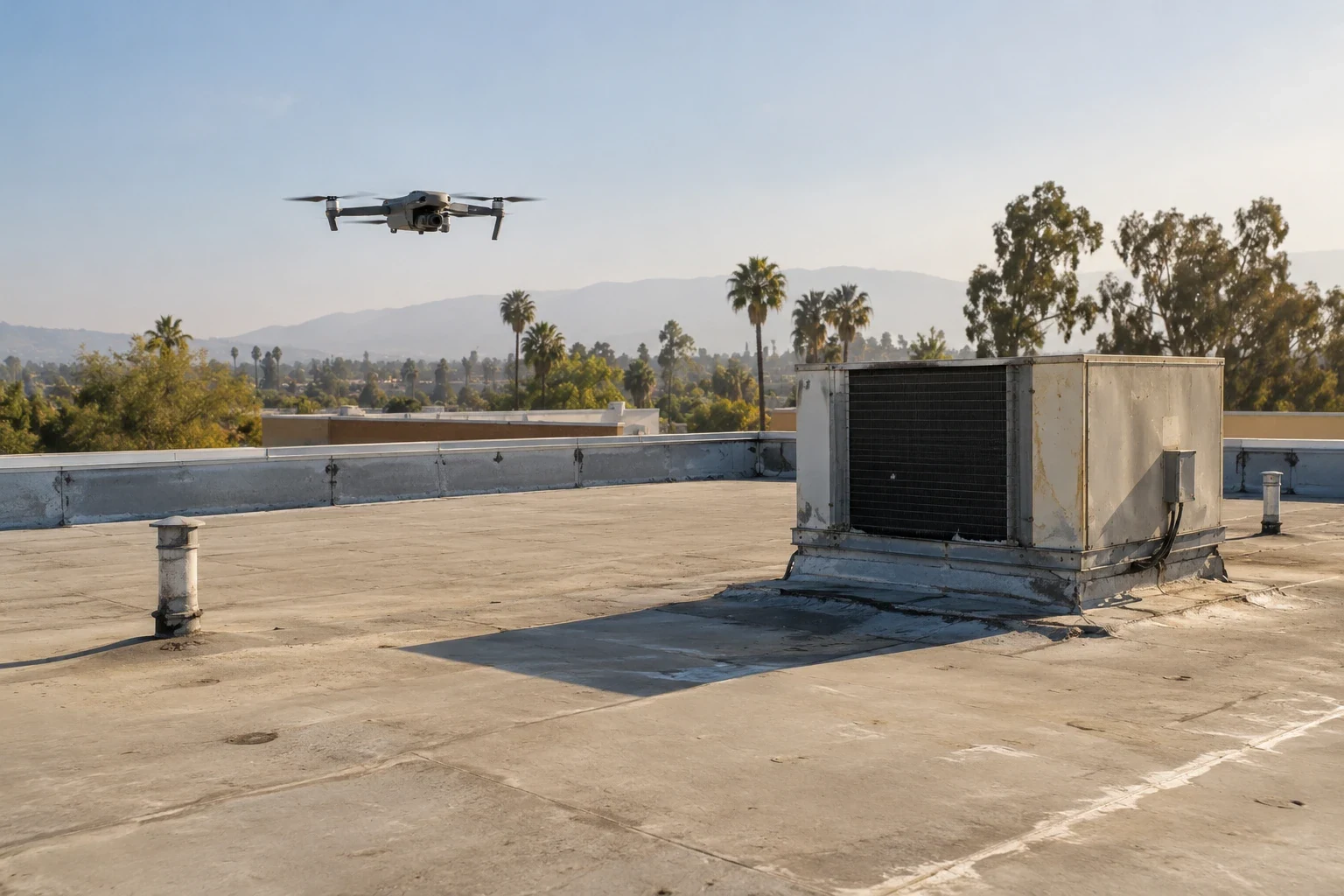
How do photographs become findings?
Use consistent roof references so an observation can be found in both an overview and its detail images. Describe visible damage or a changed appearance without assigning cause automatically. A surface color difference may justify another examination, but it does not establish wet insulation, ponding duration or membrane end of life. The recommendation should say what the photograph supports.
A located condition report can connect the images with observations from other suitable methods. Keep interpreted concern separate from confirmed condition and identify further tasks that affect the proposed scope. The facility director can then review a clear next action instead of treating an annotated picture as proof that all removal quantities or repair methods have already been established.
Define flight coverage against a roof plan and capture scale or reference points where quantities depend on imagery. Images should record date, direction, and limits such as glare, obstruction, altitude, or weather. A clear image may help locate a seam, drain, or surface change, but it cannot establish adhesion, concealed moisture, or full construction condition. Tie every interpretation to the roof area shown and list follow-up access needed for closer examination.
When does closer examination belong in the calendar?
Aerial images cannot probe a seam or reveal every supporting connection. They also do not independently determine that a roof is safe to walk. A hands-on examination needs its own suitable access and controls. Use it where the relevant detail requires closer information before the work can be selected.
Authorized sampling or another instrument may be useful when concealed construction matters. Choose the method for the assembly and question rather than ordering a core simply because an image looks unusual. Equipment, glazing or enclosure concerns may require another trade. The image record identifies that interface and its location, allowing responsible personnel to review the question before the roofing scope depends on their finding.
How is thermal imaging interpreted?
A drone-mounted thermal camera records surface temperature variation. Useful moisture screening depends on the assembly, conditions and interpretation, with appropriate confirmation. Surface materials, shading and equipment can affect patterns. The camera does not directly see water through the membrane or show a universally warmer or cooler wet area at a preset time.
A suitable thermal moisture survey records the method and coverage alongside confirmed positions. Samples describe the locations examined, while wider extent needs evidence appropriate to the decision. Aerial and handheld observations can contribute different views, but neither removes those requirements. Keep the findings and remaining uncertainty together before using them to develop a repair or retained-roof option.
What remains useful after the visit?
Retain dates, image references, coverage limits and relevant conditions with the recommendations. Later images need suitable context before a difference is treated as deterioration. Lighting, surface moisture or intervening equipment work can change appearance. The facility file should include those changes as well as completed corrections.
A purchase-related roof assessment can use the aerial record as supporting information within its actual scope. A maintenance plan can compare accessible findings later. Acceptance requirements remain with the intended reviewer. The facility director receives an organized record and the next examination task, without an assurance that photographs alone satisfy every lender, insurer or ownership decision.
Commercial Roofing Questions
Can images establish which roof areas are safe to walk?
Walking access requires its own assessment and suitable controls. The aerial record can identify a location worth examining, while the responsible personnel establish how that task can proceed. Do not use image appearance alone to approve entry onto a questionable area.
What should be resolved before the flight date is fixed?
Confirm the address, coverage, current operating requirements and necessary permissions. The facility supplies relevant access and camera arrangements. Keep a practical next method identified where approvals or conditions prevent the planned operation.
Does a thermal flight confirm wet insulation?
Thermal imaging records temperature variation that requires interpretation and suitable confirmation. The assembly and conditions influence the response. Retain the survey coverage and tested positions before using the findings to develop broader construction quantities.
How should a weather change enter the facility schedule?
Review the operation against actual conditions and explain any changed interval or method. Coordinate the revision with the relevant permissions and site contacts. The update should show the remaining coverage question and the next feasible action.
What makes the image record useful later?
Keep stable location references, dates, conditions and the recommendations together. Add completed corrections and trade changes at those locations. Later review can compare actual observations while preserving the original examination limits.