What should a local correction address?
Examine the reported defect and the condition of adjoining material before selecting a repair. Review laps, preparation and suitable component compatibility at that location. A cracked or open connection may support a defined correction, while an uncertain underlying condition can require more investigation. The repair scope should explain the useful result and what remains outside its established boundary.
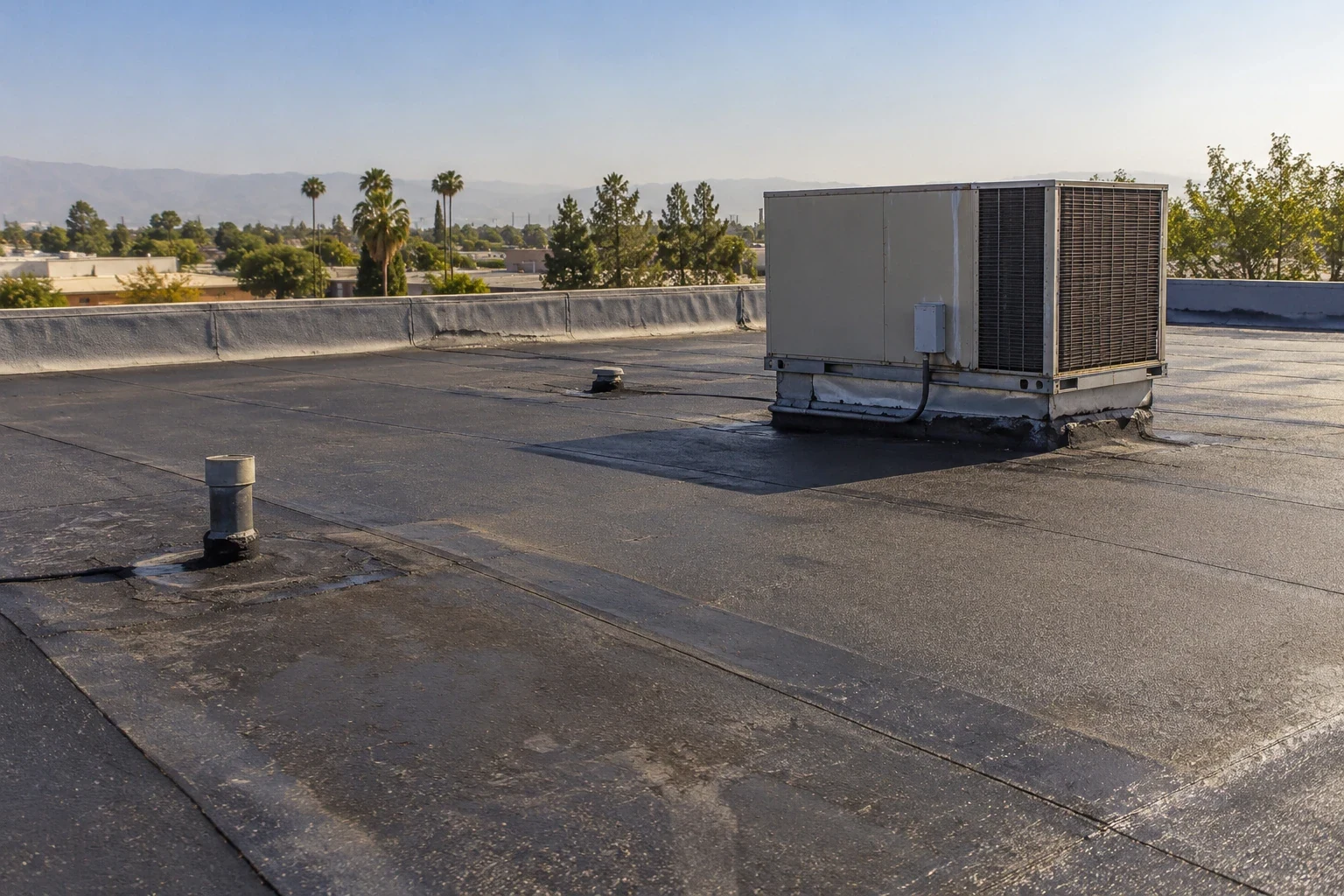
Our roof correction work records that purpose and the relevant checks. Distinguish the observed defect from a conclusion about the whole roof. A fresh interior drip still needs suitable source examination, including equipment or wall interfaces where relevant. The director receives the evidence supporting the task rather than a patch proposal based only on the room containing the stain.
How should drainage and perimeter construction be planned?
Review outlets, finished heights and the intended route for water before setting the layered build-up. Additional construction can affect existing details and available geometry. Our outlet coordination identifies roof-side corrections and related responsibilities. The proposed membrane should not leave an unresolved drainage task assumed to be corrected by the new surface.
Perimeter connections also belong within the complete assembly and project requirements. Record the proposed edge construction and any adjoining trade work. The director should know which task must precede the roofing connection and which check follows it. Keep revisions at consistent locations when existing construction changes the workable detail, allowing the final record to describe the actual completed arrangement.
What makes the local work calendar practical?
Oceanside's cooler-season rain and coastal marine layer inform preparation planning. Examine current substrate condition against the selected method and product requirements. Identify the task ready to proceed and any application needing another period. Review unfinished boundaries and appropriate protection before the next removal stage depends on delayed work.
At a Vista facility, confirm the operator's actual receiving and affected-area arrangements. For a Carlsbad property, obtain separate access and equipment instructions. The director can coordinate their calendars while retaining the information specific to each roof method. Explain changed readiness with the next facility task so the adjustment can be made before personnel arrive for an unusable period.
What decisions and records precede turnover?
A retained-layer proposal needs review of actual construction, relevant conditions and applicable requirements beyond sampled locations. Our recover assessment describes the evidence and complete assembly questions. Review the layered proposal through the applicable authority and accepted project submission. Oceanside’s municipal enforcement changed to the 2025 California Title 24 codes in early 2026. Ask how the alteration’s energy requirements are being addressed, including relevant exceptions. Keep that answer with the approved construction before ordering the components needed for installation.
Retain materials, installed locations, approved changes and relevant checks with the final scope. Review manufacturer and workmanship terms through their actual documents. Our later maintenance planning can organize accessible examinations around the completed roof. Add subsequent damage and equipment alterations to the same references so later tasks start with useful construction and coordination information.
Confirm how the operator will arrange access for a detail that needs equipment involvement. The completion file should provide the responsible contact and the known roofing connection, allowing a later observation to reach the appropriate personnel. That practical service arrangement helps the facility move from a reported concern to suitable examination without treating the earlier application method as proof of its cause.
Commercial Roofing Questions
Does the sheet name establish its application method?
Identify the actual product and specified system requirements. Suitable methods have their own preparation, conditions and controls. The proposal should describe the selected procedure and its facility coordination before a work period is fixed.
Can a lap defect support a local repair?
Examine the connection, adjoining material and relevant concealed questions. A defined correction needs a suitable preparation and compatible detail. Keep any further investigation separate from the evidence supporting that particular task.
What should happen before heat-related work?
Establish the appropriate method, applicable safeguards and project authorization with responsible personnel. Coordinate affected facility activities and controls. The calendar needs those arrangements before it relies on the application task.
Does another layer settle drainage concerns?
Review the actual geometry, finished heights and outlet details with the intended build-up. Identify the relevant correction and related trade responsibility. Adding membrane does not establish that an unresolved outlet arrangement is suitable.
What helps coordinate later service?
Retain completed details and material information with coverage documents and operating contacts. Add later alterations at consistent locations. The operator can then arrange suitable examination and relevant equipment involvement from the known construction.