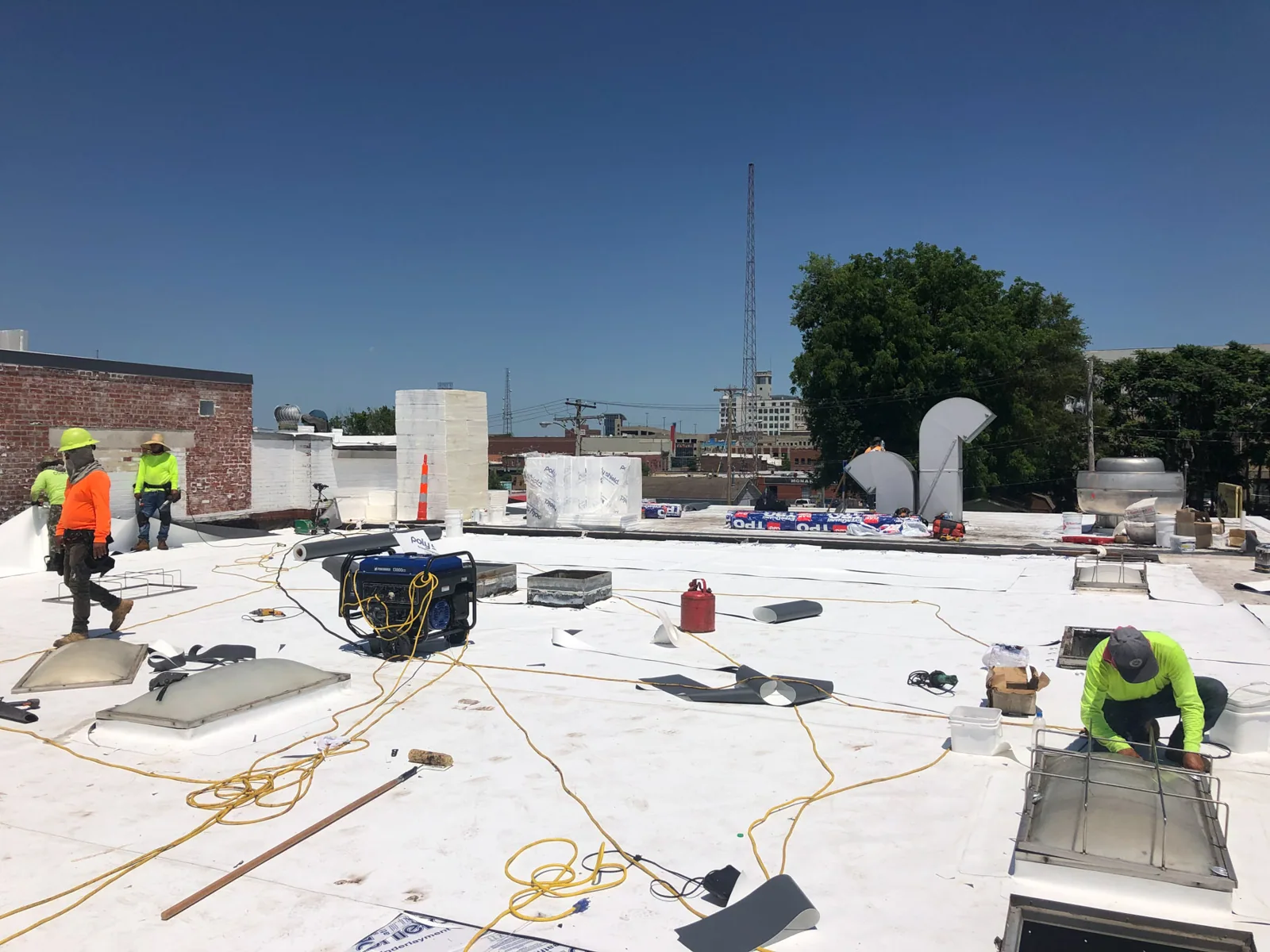
How is open-roof exposure managed?
Choose working sections according to the method, access, available resources and protection that can be installed under current conditions. The plan identifies temporary measures and closing details suitable to the task. A nightly tie-in is a planned connection requiring appropriate materials and conditions, not a blanket assurance that every area will finish identically each day.
Regional cooler-season rain informs planning, while the actual forecast and roof conditions govern the available work period. Santa Ana weather requires review of handling equipment, access and secure storage against their operating limits. A regional gust figure is not a universal hoisting cutoff. The facility receives the next practical action and any wind hold, with protection and remaining exposure explained.
Which operating controls need coordination?
The facility team identifies occupied rooms, receiving periods and equipment arrangements relevant to the work. Qualified personnel review air-intake protection and any necessary HVAC service interval before the roofing sequence relies on it. The planned method must suit the equipment and operation. Fire, electrical and access controls also retain their responsible review where affected.
Our occupied roof sequence connects those tasks to the construction section. Drainage must remain appropriately managed during the work; arbitrary plugging is not a routine debris-control instruction. Establish the suitable protection and discharge arrangement for the actual phase. This gives the director a clear operating plan, including restrictions, rather than an assurance that every room can continue unchanged beneath removal.
Who needs the work plan before mobilization?
At Ocean Ranch Corporate Center, obtain the building's actual tenant, receiving and access contacts. A Rancho Del Oro property has its own arrangements. Share the relevant work areas, delivery timing and restrictions early enough for those contacts to coordinate them. The district identity supplies location context; the operator supplies the usable calendar.
Oceanside enforces the 2025 California Title 24 editions from January 1, 2026. Confirm the address authority, applicable submission basis and scope provisions before finalizing the project. California Energy Code alteration requirements and exceptions need review for the actual work. Design and approval tasks should be assigned before material selection or a starting period is treated as settled.
What should remain after turnover?
Completion records identify installed material, corrected details and authorized changes at usable roof locations. Preparation and concealed-work photographs help explain the assembly after the membrane covers it. Keep relevant checks and any remaining trade task assigned. Actual manufacturer and workmanship documents govern their respective coverage and reporting requirements.
A maintenance scope can use that record to examine accessible outlets and interfaces later. Add equipment changes and new observations at the same references. The facility director then has a construction history connected to the work actually completed, allowing the next roof decision to begin with evidence instead of a generic expectation about replacement life.
Commercial Roofing Questions
Should a damp coastal morning stop every task?
Assess current conditions against the task and selected product requirements. Some preparation or examination may remain useful while application waits. The phase still needs suitable protection and related operating arrangements, with another period scheduled where readiness is not established.
What should be available for concealed findings?
Keep the approval contact, location record and investigation or design responsibilities clear. A discovery needs documentation and a defined treatment before its quantity becomes authorized work. Include practical protection while the revised decision is reviewed.
How are air-handling precautions established?
Facility staff and qualified trades review the actual equipment and proposed method. Any necessary control or service interval is planned with them before roofing relies on it. The calendar identifies those responsibilities and the conditions needed for the phase.
Which code edition applies if design began earlier?
Establish the accepted submission basis with the appropriate authority. Oceanside identifies its 2025 Title 24 enforcement from January 1, 2026, while the project still needs review of address and scope requirements. Design history alone should not settle that decision.
What makes turnover useful to facility staff?
Retain completed locations, material information and approved scope changes with the relevant checks and issued documents. Keep unfinished tasks assigned. Later inspections can then compare current conditions with the construction actually delivered.