How should welded seams and details be checked?
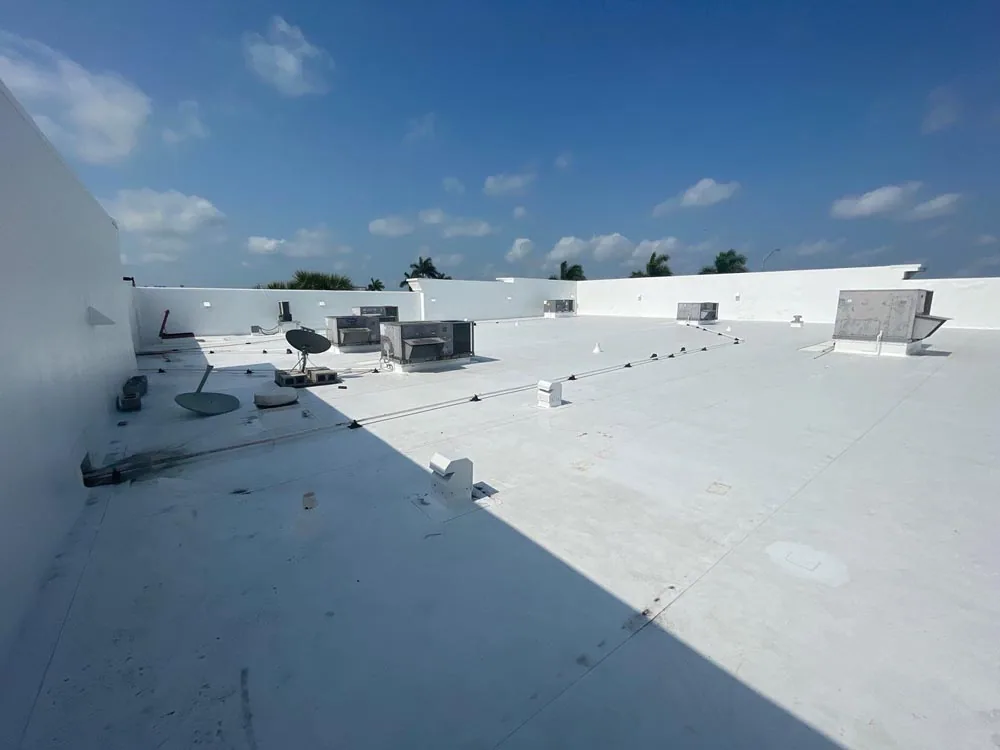
Heat welding joins compatible thermoplastic materials using a procedure suited to the product and actual conditions. Establish the applicable settings and check the completed seams through the specified inspection method. A visible weld line does not by itself verify the completed connection. Keep the relevant checks tied to the installed locations and any corrections. If the procedure needs adjustment as conditions change, establish it before advancing the affected seam work. The field record should identify which connection was examined, the action taken and the subsequent check. That location-based information helps the director understand completion without interpreting a general progress photograph as evidence for every seam on the building.
Penetrations, corners and transitions need compatible details as well as field seams. Our flashing coordination addresses those interfaces. Cleanliness, preparation and access influence whether the detail can be constructed as intended. If an existing sheet needs repair, review its condition and compatibility before relying on a welded patch. The correction should be evaluated at the actual connection rather than inferred from the material name.
A seam check should follow the selected manufacturer procedure and project specification; log its roof position, result, and any corrective work separately. Retest repaired areas.
What should be planned at edges and outlets?
Perimeter construction is part of the complete roof assembly. Review attachment, transitions and the specified edge components for the actual geometry. Our edge detail work connects those tasks with the membrane installation. The director should see any adjoining trade responsibility where wall or metal work affects the completed waterproofing connection.
Outlets need suitable details and an arrangement that supports the proposed drainage geometry. Consider finished heights and accessible service routes before the insulation build-up is fixed. A new membrane does not resolve an outlet problem that remains outside the scope. Record any drainage correction and the next related task so the operator can understand what is being changed and why.
Can TPO be installed above an existing roof?
A retained-layer proposal requires review of the actual construction, conditions and applicable requirements. Suitable investigation contributes evidence at its stated locations. The proposal also needs to address attachment, geometry and project requirements beyond those observations. Neither a dry sample nor an attractive surface settles every question about the whole roof's suitability.
Our recover assessment describes the basis for retention where appropriate. A removal option may be needed where findings or project requirements make that approach unsuitable. Oceanside identifies 2025 California Title 24 enforcement from January 1, 2026. Establish the accepted submission basis and relevant energy alteration provisions, including applicable approaches and exceptions, before treating the proposed build-up as ready.
How are facility operations and later service organized?
Review entrances, equipment and affected rooms with the operator before choosing the work boundary. Qualified personnel coordinate equipment controls where the method needs them. Keep the responsible contact and restoration arrangement in the sequence. The director should receive the consequence of a changed roof task alongside the next operating decision required for it.
At turnover, retain material identification, roof locations and relevant installation checks with the completed scope. Manufacturer and workmanship coverage needs review through its actual documents. Our maintenance planning can organize accessible examination around the final arrangement. Add equipment changes and new damage observations to that record so later service starts with the known assembly and the relevant facility coordination.
Commercial Roofing Questions
Does choosing TPO establish the entire roof specification?
Select the supporting layers, attachment and perimeter construction with the membrane. The approved assembly and project requirements establish the complete arrangement. The proposal should explain these components and the condition information supporting their selection.
What affects the start of application?
Examine the substrate and current conditions against the selected method and material instructions. Identify useful preparation while another task waits for readiness. Communicate any calendar change to personnel arranging access or deliveries.
Can an older TPO sheet accept a welded repair?
Review its condition, preparation needs and material compatibility at the proposed connection. Suitable procedure and completed seam checks matter. A matching material label does not establish that the damaged location is ready for a durable correction.
Does a recover avoid all concealed-layer investigation?
Establish the retained construction and relevant conditions through suitable information and authorized investigation where needed. Keep findings within their coverage. Project, attachment and geometry questions also need review before retention is selected.
What helps the operator manage subsequent work?
Retain the assembly, completed locations and applicable coverage documents with service records. Add later equipment changes and observations at those references. The facility can then coordinate suitable examination and a defined correction from the actual construction.