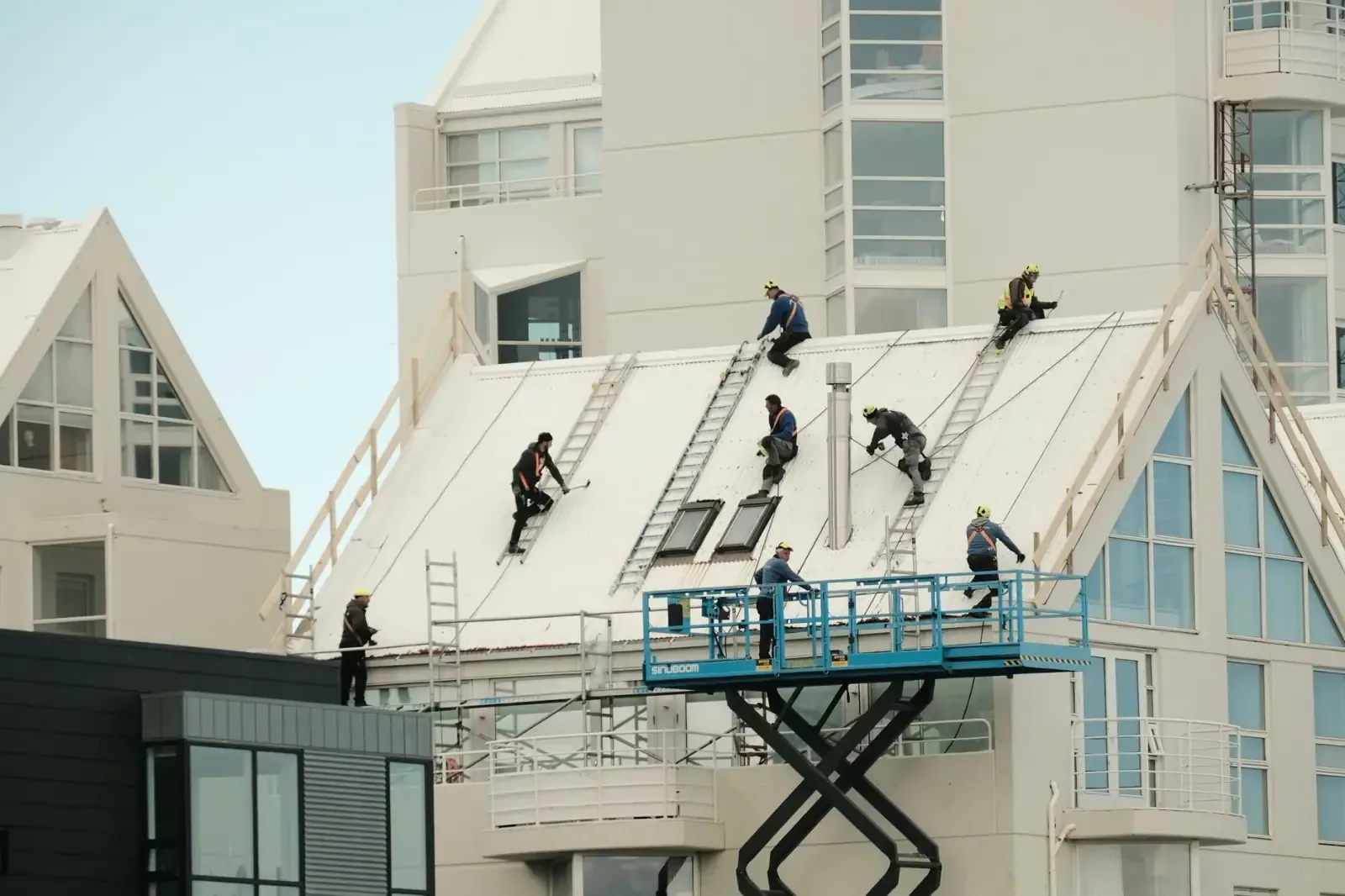
How is the occupied area coordinated?
The facility team identifies affected activities and practical protection below the roof. Goods or equipment may need relocation, while restricted areas require responsible personnel's coordination. The roofing sequence needs those arrangements established before it depends on a particular operating period. Describe the actual restriction and contact rather than assuming the building can continue every activity unchanged.
Qualified personnel review air-handling or equipment controls where the work affects them. Any planned service interval is agreed through those personnel, with the method suited to the operation. In a Rancho Del Oro property, confirm the actual rooms and receiving schedule. The roof plan and facility calendar then show which tasks are ready and which supporting decision remains necessary.
What should be documented during the visit?
Photograph accessible conditions before covering them when practical, then record the temporary work and remaining concerns. Images need locations and dates so they can be compared with prior information. An observed opening and its interpreted cause remain distinct where evidence is incomplete. The work record identifies the authorized task and the conditions that limited examination.
Our claim documentation assistance organizes that construction account for the owner and reviewer. Actual policy terms and insurer assessment determine coverage. Keep temporary invoices and authorizations separate from a later storm repair proposal. That makes the purpose and scope of each expenditure understandable without treating emergency work as an automatic covered loss.
When do fire or wider findings need another review?
Regional fire history gives a reason to discuss access and building assessment after reported exposure. The 2017 Lilac Fire threatened communities including Oceanside and Vista, while the 2014 Poinsettia Fire in Carlsbad destroyed commercial buildings. Those historical events do not establish damage at a current property. The actual finding and relevant professional review determine the next task.
For a Carlsbad building with reported exposure, coordinate access with responsible personnel before developing fire-related roof work. Wider concealed moisture concerns may also require suitable investigation. Thermal evidence needs interpretation and confirmation, with sampled conditions kept local. The facility director receives the additional assessment needed before a broad removal quantity is accepted.
How is the permanent task placed on the calendar?
Develop the lasting correction from the established findings and complete assembly requirements. Preparation, materials and related trade work determine readiness alongside the actual weather. Marine-layer conditions can affect a planned application, but no fixed clear-weather interval proves every substrate is ready. The facility schedule should retain the useful next task and its requirements.
Keep temporary protection review assigned while permanent work is arranged. A roof condition assessment may help address questions beyond the immediate opening. At completion, retain the repair locations and relevant checks with the emergency record. The director then has a traceable sequence from the initial report through the corrected detail, with remaining tasks visible for later coordination.
Commercial Roofing Questions
What should facility staff do near affected equipment?
Coordinate the area with responsible qualified personnel who can assess electrical, structural or equipment concerns. Provide safe observations and restrict access where appropriate. The roofing response follows those controls rather than approving equipment decisions from a phone description.
Can temporary protection be assigned a fixed life?
Its condition and usefulness depend on the selected measure, attachment, weather and supporting construction. Record its purpose and follow-up needs. Report renewed entry or movement so the next assessment can address changed conditions.
What if wind prevents the proposed roof task?
Review the operation against current conditions and its limits, then identify the feasible next action or revised period. Keep the facility contact informed about exposure and protection needs. A regional weather statistic does not settle every access decision.
How should the insurer’s review be supported?
Retain dated observations, authorizations, temporary work and invoices with clear locations. The insurer can review that construction account alongside the policy. Coverage and reporting requirements follow the actual documents, while the contractor explains the work performed.
What establishes the permanent repair date?
Materials, preparation, useful conditions and related trade readiness need coordination with the facility calendar. Define those dependencies before fixing the work period. Keep the temporary measure and its reassessment separate until the lasting correction is complete.