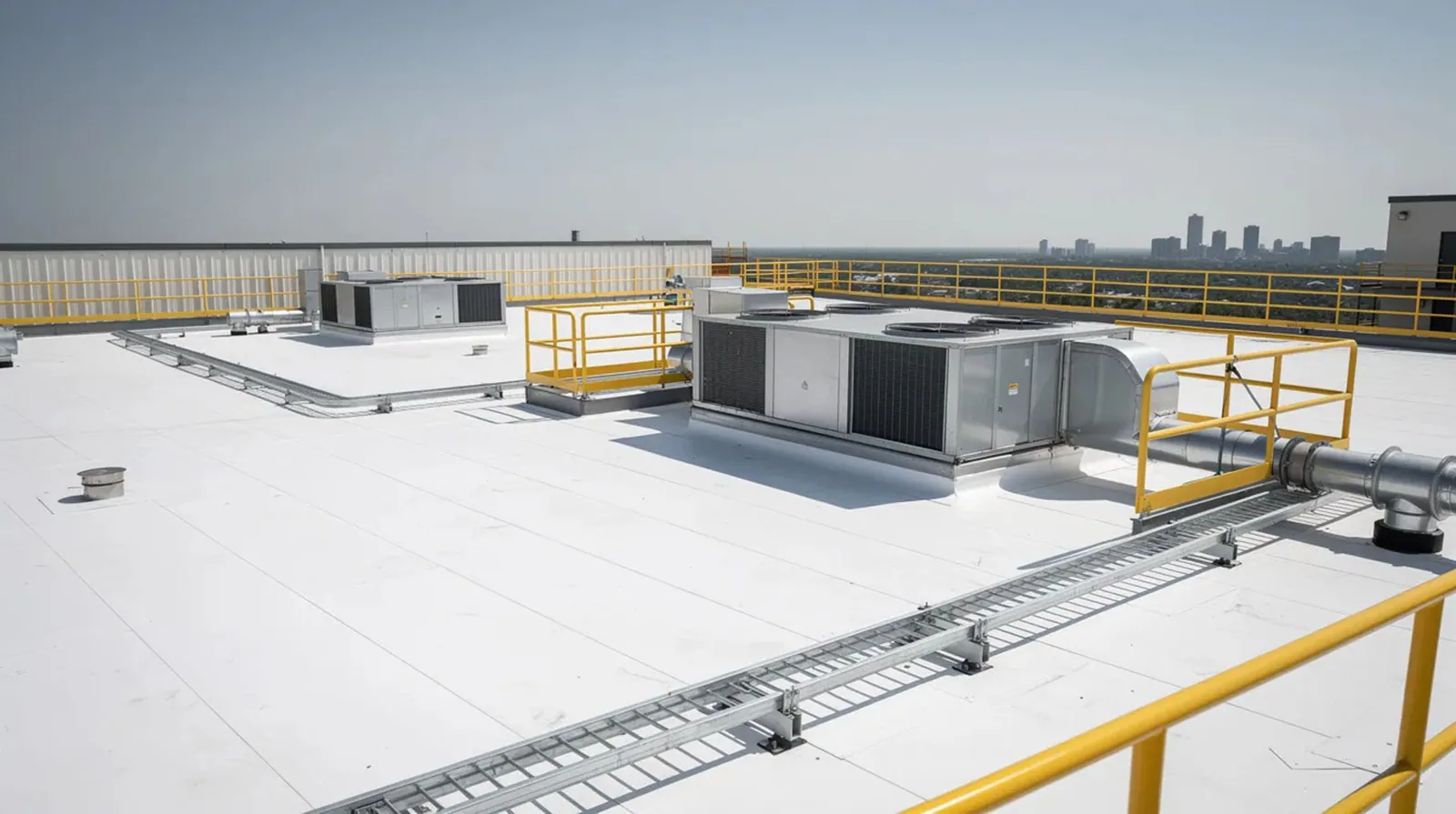
How are water and drainage findings separated?
A reported drip is compared with accessible roof connections and relevant equipment or building conditions. Timing can guide the investigation without proving an exterior source or excluding condensation. Testing needs a method suited to the construction and occupied space, with authorization and practical protection. A roof inspection should not turn a suspected route into a settled repair quantity.
Drainage observations distinguish accessible debris from damaged interfaces or geometry questions. Outlet review can identify the further plumbing, measurement or design task needed. Regional cool-season rain provides planning context, while actual findings determine the correction. The report shows that sequence so cleaning, detail rebuilding and broader drainage work are not presented as interchangeable responses.
How does the facility calendar influence coverage?
Agree on roof access, relevant interior entry and any controlled areas before setting the visit. Equipment or air-handling precautions require responsible personnel's review where the method affects them. The assessment may need a planned interval or another trade's input. Record those dependencies rather than assuming a quiet roof walk will have no effect on the operation below.
At Ocean Ranch Corporate Center, the building contact provides receiving and service arrangements for this property. A reported event can also change the task: Santa Ana weather may prompt examination of observed component changes once suitable access is available. Current conditions determine the visit method and coverage. The calendar should identify what can be examined now and what needs another period.
How do findings become a usable recommendation?
Describe the concern, its location and the correction supported by the evidence. Priorities reflect consequences and the building's intended plan, with unresolved questions assigned to a further task. A local connection may need compatible preparation; a wider assembly choice may require additional investigation. The report should explain the difference before recommending expenditure.
Our roof budget planning uses those findings to compare complete options. Keep measured work separate from concealed allowances, including supporting trade and design tasks where necessary. The facility director can then review a construction scope and its operating needs together instead of approving a broad figure that leaves the important preparation or access arrangements undecided.
What should be kept between visits?
Retain the date, examined locations, photographs and relevant methods with the recommendations. Add completed work and authorized changes at those same references. A maintenance schedule can use that file to compare accessible details later, while the original inspection preserves its own coverage and limitations.
Later equipment changes and renewed water observations belong in the record. Current examination establishes their significance rather than the earlier report promising a fixed remaining service life. Keep actual coverage documents and notice procedures with the installation they apply to. The facility director then has a practical history for deciding the next examination or correction.
Commercial Roofing Questions
How should low cloud affect the visit?
Review actual conditions against the intended method. Some accessible examination can remain useful while another task waits. Record the distinction and arrange the further period needed for information that affects the proposed work.
What does a serviceable-looking roof still need?
Examine relevant accessible connections and compare the available repair history with current conditions. Record useful serviceable locations as well as concerns. Keep concealed questions and coverage limits visible so the report supports the decision it is intended to inform.
When should equipment personnel be involved?
Include them when an interface, operating precaution or intended alteration affects the examination. Establish their task and available interval with the facility director. The inspection can then connect roofing observations with the related question before a correction is committed.
Can the report settle every removal quantity?
Use its findings within the examined coverage. Wider concealed quantities may need suitable investigation or an allowance with a defined approval process. The recommendation should identify that next task before the budget depends on uncertain extent.
What makes repeated inspections useful?
Use consistent locations and retain completed corrections and trade changes with the dated observations. Later examination can compare actual conditions with that history. Each report keeps its own method and limits, giving ownership a clear basis for the next action.