When does a test help the decision?
Testing should answer a defined question and suit the installed construction. A method that introduces water requires authorization and suitable protection for the assembly and spaces below. Drainage, loading and concealed routes matter to that choice. We do not make hose or flood testing the default simply because a stain remains unexplained.
If sampling is needed, agree on its location and restoration method before opening the roof. Samples provide local findings, with further investigation where the scope depends on wider information. The facility director receives the method, conditions and coverage with the result. That makes a subsequent repair quantity traceable to useful evidence rather than a confident conclusion that the investigation did not establish.
Which detail work belongs in the repair?
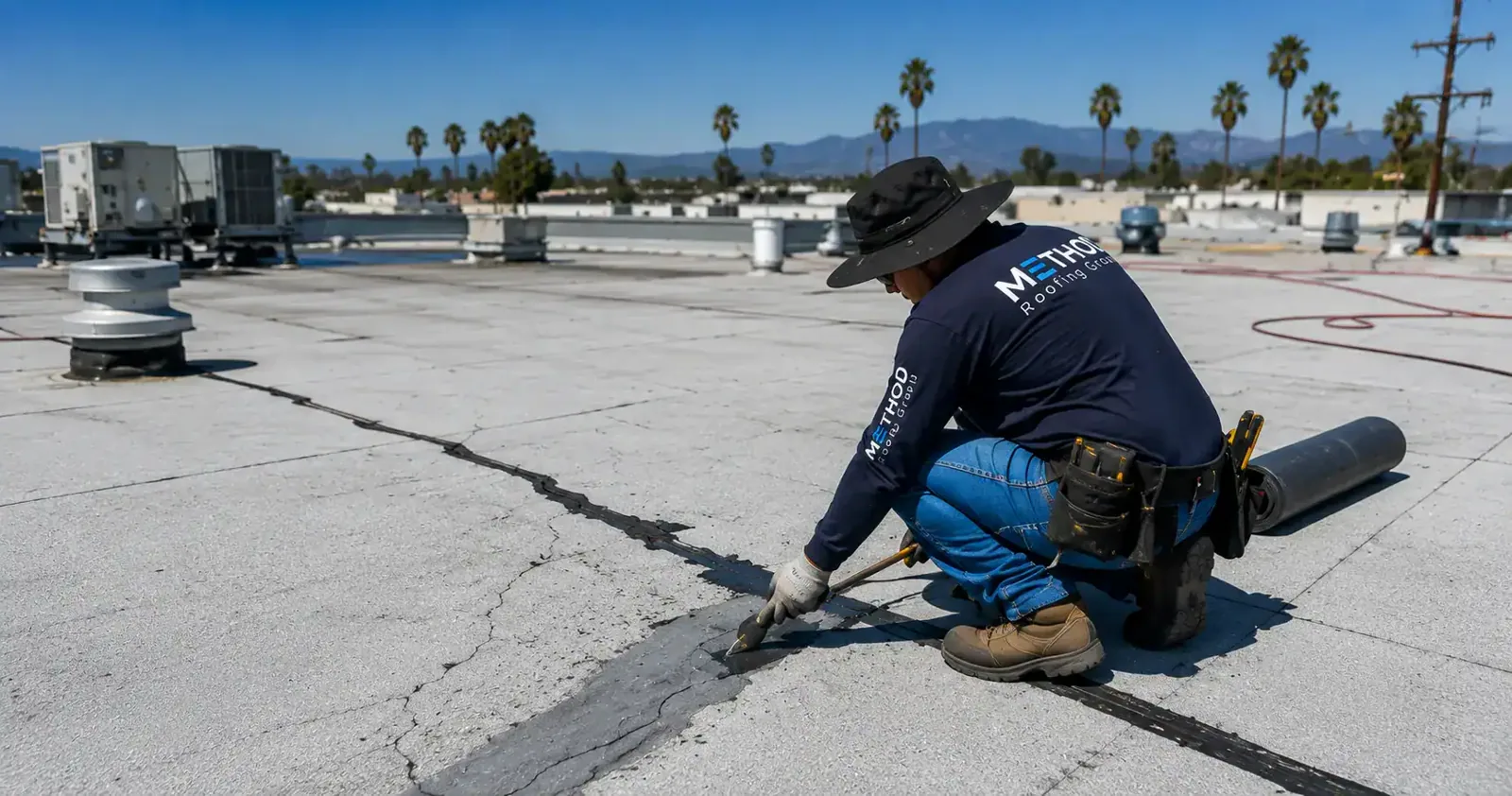
The defined correction identifies preparation, compatible materials and the connection being restored. Existing sheet condition and product requirements influence joining or application. A dry surface may be necessary for the selected method, but readiness and cure follow the actual instructions. The calendar should allow the suitable work period rather than promise a return at the next clear morning.
At equipment curb interfaces, relevant personnel coordinate mechanical or support tasks needed before flashing can finish. For areas with standing water, examine the water route and any further drainage question. The roof scope should show how those tasks fit together, keeping responsibility and authorization clear when another trade affects the completed connection.
How is occupied work coordinated?
The facility director identifies sensitive rooms, restricted areas and operating periods relevant to the proposed task. We use them to plan access, material delivery and protection. Any equipment or air-handling arrangement requires the responsible qualified personnel's review and an agreed interval where needed. The method should fit those controls rather than depend on an improvised change to operating equipment.
Regional marine-layer conditions and cooler-season rain help frame the work calendar, while actual surface readiness establishes the application window. At a Rancho Del Oro property, keep a contact available for scope questions. If weather or a concealed finding changes the sequence, provide the affected location and next decision so the facility can coordinate the revised work period.
What remains in the roof record afterward?
Retain the examination results, repair locations and relevant completion checks together. Photographs should explain preparation and the corrected detail. Keep uncertain routes and any further task visible rather than treating an immediate dry interior as proof that every concealed issue is resolved. Follow-up responds to the actual remaining question and later observations.
A maintenance scope can compare accessible details with that record. If another drip is reported, add its room, timing and intervening activity. Actual policy and warranty documents govern their respective coverage decisions. The facility director then has a usable construction history for the next examination, along with a clear account of what was corrected and what still needs review.
Commercial Roofing Questions
How should we record water before the examination?
Use safe photographs, room references and the time the observation occurred. Include rainfall and relevant equipment or trade activity. We compare that record with accessible construction, while the physical findings establish the useful next investigation or correction.
Can temporary protection replace the permanent repair?
The temporary scope identifies its purpose and limitations while the lasting correction is developed. Its condition needs reassessment if circumstances change. Retain that work record separately, so the facility calendar shows both immediate protection and the unresolved permanent task.
Is a moisture image enough to locate the leak?
Thermal evidence can guide further examination under suitable conditions. It requires interpretation and appropriate confirmation, and does not establish an entry route by itself. We keep the image coverage and confirmed findings clear before using them in the repair scope.
What should be coordinated before testing near sensitive rooms?
Identify the proposed method, authorization, building protection and responsible contacts. Suitable conditions and construction determine whether the test can proceed. Related equipment or enclosure questions receive their own trade task where needed.
What establishes a useful closeout?
The record identifies the supported correction, completed locations and relevant checks, with unresolved questions assigned to the next task. Later observations can be compared at those references. No preset rain count replaces examination of the actual remaining concern.