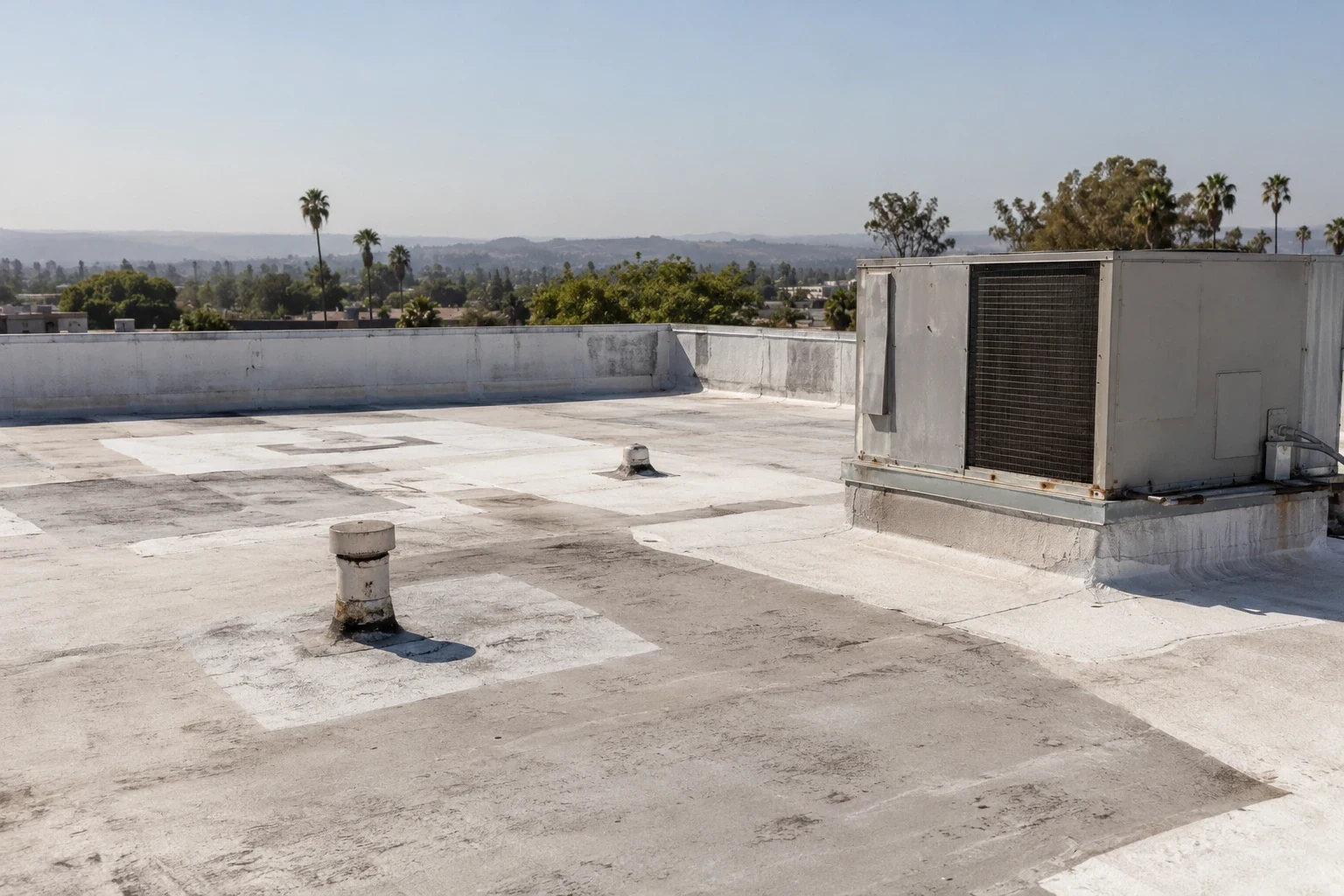
How does surface condition set the work period?
Marine-layer low cloud can affect the conditions available for a planned coastal repair. Actual surface moisture and product instructions determine readiness, with temperature and other requirements considered for the method. No fixed morning interval establishes that every substrate has dried. Some preparation may remain suitable while another task waits, and the calendar should show that distinction.
The sequence also needs practical protection where a detail or section is opened. Preparation is not automatically suitable in damp conditions simply because finishing is planned later. Establish the opening, materials and closure arrangements before proceeding. The facility contact receives the next action when conditions change, allowing occupied-area arrangements to follow the revised task rather than an unsupported same-day completion promise.
What makes drainage part of the repair?
Accessible debris, damaged outlet interfaces and roof geometry can require different corrections. Examine the intended discharge route and identify further measurement, plumbing or design input where needed. A patch near standing water does not change slope or settle a concealed restriction. The repair scope should describe the concern actually being addressed.
Our outlet assessment separates roof-side work from related tasks. A local puncture correction may also be appropriate where the evidence supports it, with preparation suited to the assembly. The director can combine compatible tasks in a practical visit while keeping their individual purposes clear, rather than assuming one standard order fixes every concern on the roof.
How should occupied access be arranged?
The facility team identifies roof entry, restricted spaces and the activities beneath proposed work. Equipment or air-handling precautions require responsible qualified personnel's review where affected. The sequence includes the agreed interval and related tasks. A repair can involve limited work while still requiring meaningful coordination at a particular room or rooftop unit.
At an Ocean Ranch Corporate Center building, obtain actual receiving and equipment arrangements from the operator. For a Rancho Del Oro property, identify its separate site contact and access requirements. The city's business-park setting supplies local context, while this building's information determines the repair period and staging. Roof geometry and installed materials come from examination.
What should follow the repaired detail?
Retain preparation and final photographs with material identification, work locations and relevant completion checks. Testing needs a suitable method and authorization for the construction and spaces involved. A hose or flood test is not routine proof for every repair. Record what the chosen check establishes and any remaining source question that requires follow-up.
A maintenance visit can compare accessible details at the same references. Actual manufacturer and workmanship documents govern coverage and notice requirements; keep those with the corresponding installation. Add later equipment changes or new observations to the roof history. The facility director then has a useful account of the completed correction for the next examination and budget decision.
Commercial Roofing Questions
How should a repair awaiting larger work be selected?
Consider the current exposure, remaining assembly and intended project timing. Define useful protection or correction with its limits and monitoring needs. The recommendation should explain what the task resolves before treating every small repair as essential or dispensable.
Does every repair need the same dry-weather interval?
Readiness follows the selected product and method under actual conditions. Preparation and application can have different requirements. The calendar identifies those needs and the practical response where conditions prevent the intended task.
What establishes that the correction is complete?
Use the relevant method checks and record the finished location and materials. Keep unresolved entry questions assigned for further examination. Testing that introduces water requires suitability, authorization and protection, rather than being a default closure requirement.
Can several old patches remain?
Examine their condition and compatibility with the proposed work. The scope should identify which materials remain and why, with suitable correction where needed. Patch count alone does not establish either a replacement decision or that each earlier treatment is serviceable.
Which documents should be reviewed before repair?
Obtain the available installation and coverage documents and identify relevant requirements for the actual work. Keep required notices and product information with the scope. Those terms guide their respective decisions, while assembly compatibility remains part of the technical correction.