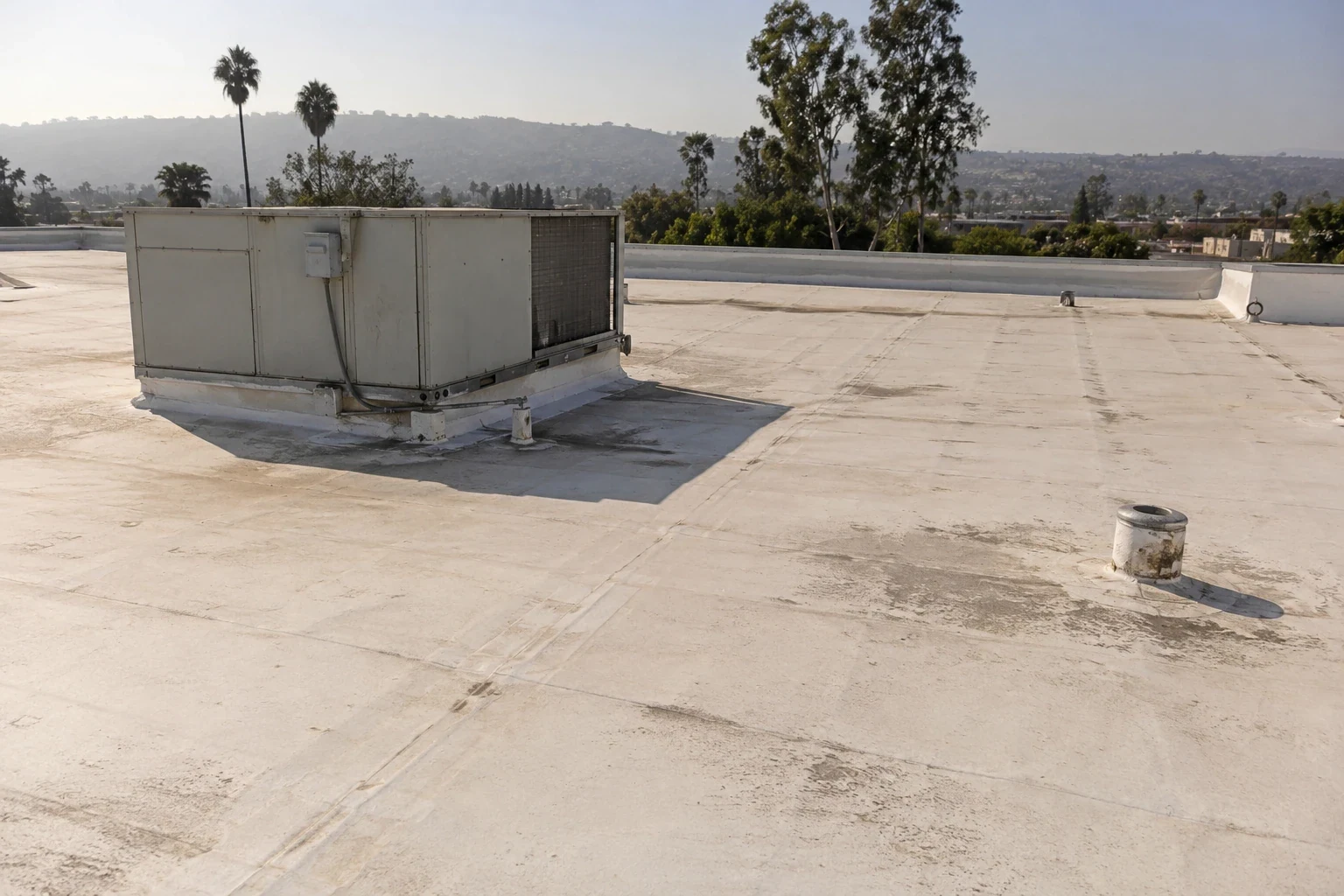
How are compatible welded connections established?
Follow the selected membrane's procedure for welding and its required preparation. Current conditions influence the appropriate settings and checks. Record relevant completed connections at identifiable locations, including any correction and subsequent examination. A smooth-looking seam is an observation, while acceptance needs the appropriate checking method for the installed product.
Our roof opening details connect the field membrane with suitable compatible components. Review corners, transitions and existing-material interfaces before selecting the method. Where the proposal involves an older sheet, its condition and prior treatment matter. The director should know whether the detail is ready for a defined correction or needs further examination of the surrounding connection.
The KEE formulation and accessory products should be selected as a compatible system, then installed using its stated surface preparation and welding procedure. Record the equipment settings or other checks required by the manufacturer at representative roof locations. Where a weld is interrupted by a curb, drain, or perimeter transition, show how the detail continues into the adjacent assembly and who verifies that connection before concealment.
What weather readiness belongs in the calendar?
Oceanside's coastal conditions include cooler-season rainfall and marine-layer cloud. Those patterns inform planning; the observed surface and selected installation instructions establish readiness at the roof. Confirm material preparation and weather-sensitive tasks before choosing the next opening. Identify useful work that can proceed when the planned application needs another period.
Keep the operator informed where readiness changes affect receiving, access or an equipment service task. Review unfinished boundaries with the appropriate method and available materials. Our occupied-building coordination connects the roof sequence with affected activities. A changed task should arrive with its practical calendar consequence and the next responsibility, allowing the director to arrange the necessary personnel deliberately.
How should retention and project requirements be reviewed?
A recover proposal needs a basis for the actual retained construction, relevant conditions and attachment. Suitable samples or observations establish information within their coverage. Review finished geometry and complete detailing as well. The membrane designation does not settle these questions or provide a substitute for examining the proposed assembly.
Our recover planning explains the evidence and further requirements. Confirm which authority receives the KEE project and how its accepted submission establishes the governing requirements. For Oceanside municipal work, current enforcement began using Title 24’s 2025 edition in January 2026. Document the energy review for the proposed alteration, including a suitable compliance route and exceptions where relevant. Resolve a required assembly revision before the installation sequence relies on that construction.
What should remain useful after completion?
Retain the product and supporting assembly identification, roof-area photographs and relevant installation checks with the final scope. Keep authorized changes at the same roof references. Review manufacturer and workmanship terms through their actual documents. An equipment addition may need particular coordination or notice; the facility should establish the applicable requirements before altering the roof.
Our maintenance scheduling can use that record to organize accessible examination. Document subsequent damage, equipment changes and new interior observations. Review a fresh drip through suitable source examination rather than assigning it automatically to the nearest membrane detail. The known construction and operating contacts help the director arrange an informed next task.
Agree on how a later service team will obtain the selected product information and reach affected equipment. Retain responsible contacts with the operating calendar. A report can then be directed to the person able to arrange access and the appropriate roofing examination, keeping a material or equipment question from becoming an unassigned task between visits.
Commercial Roofing Questions
Does the KEE designation establish exposure suitability?
Review the selected product guidance with actual equipment and process information. Chemistry alone does not establish every permitted use. The proposal should explain relevant exposure management and the complete construction being selected.
What should precede a retained-layer proposal?
Establish useful information about the existing assembly and relevant concealed conditions. Suitable investigation has stated coverage. Review attachment, finished details and applicable project requirements before the construction relies on retention.
How should completed welds be evaluated?
Use the selected product procedure and appropriate connection checks for actual installation conditions. Locate the record and any correction at the affected detail, showing the connection examined and the relevant follow-up check. Appearance alone does not provide the complete basis for evaluating the connection.
Which operator information improves scheduling?
Provide receiving arrangements, equipment service periods and access requirements for affected areas. Connect them with surface readiness and the installation method. A changed roof task can then be coordinated with the personnel responsible for the related activity.
What records support future alterations?
Keep product identification, completed construction and coverage documents with approved changes. Review the applicable requirements before adding equipment or modifying a detail. The director can coordinate later work from the actual roof arrangement.