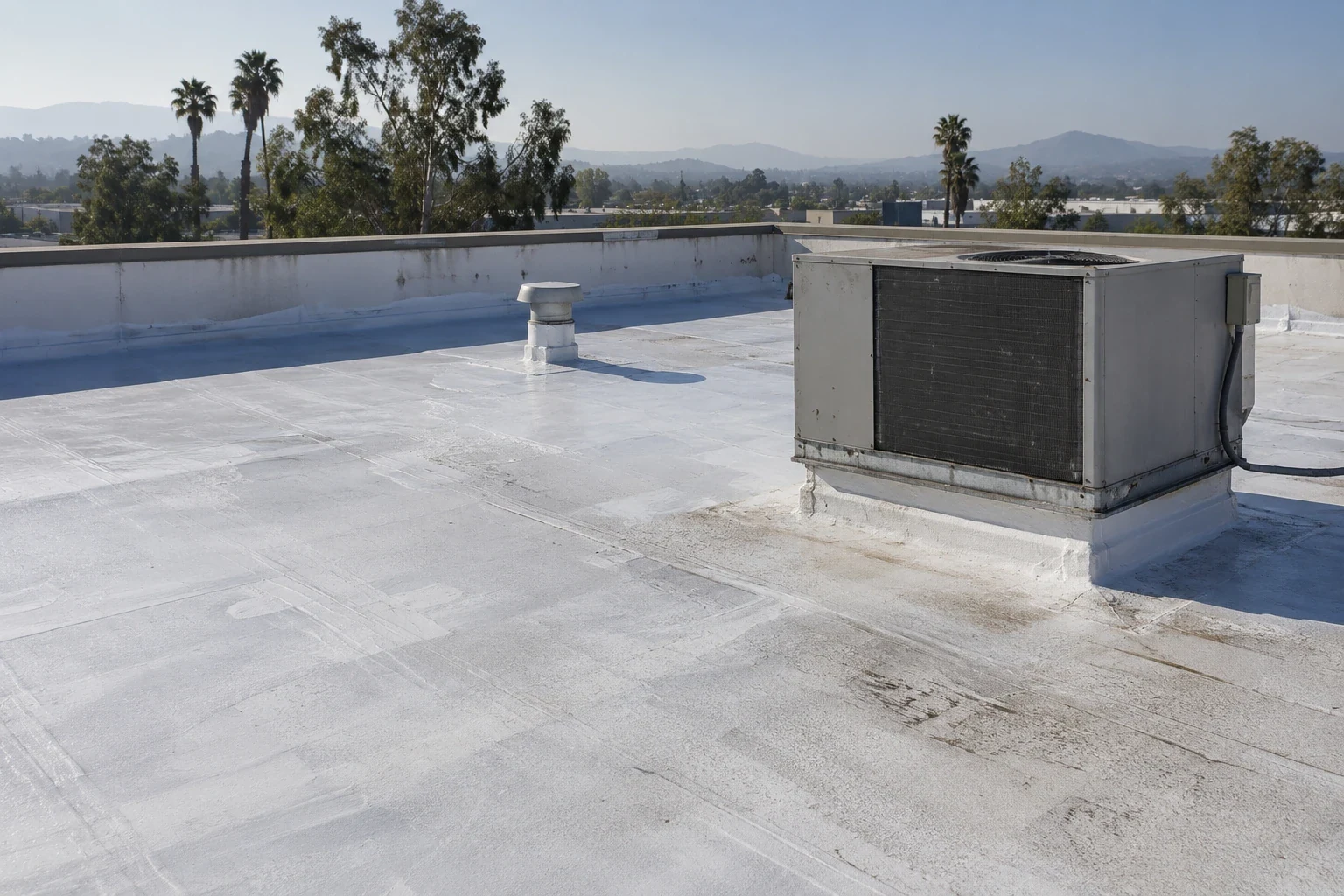
How does drainage affect the proposal?
Outlets and standing-water concerns need their own assessment. Debris cleaning, damaged flashing and a geometry issue can require different action. The selected coating's service limits matter, while the water route still needs a suitable arrangement. Coating does not change roof slope or restore a concealed pipe restriction.
Our drainage coordination identifies accessible roof work and further plumbing or design input. At a property near Oceanside Harbor, confirm the operator's actual receiving routes and access before planning outlet work. The harbor's commercial setting helps frame coordination; the building provides the layout and operating period. Keep drainage correction ahead of the field application where the proposed system depends on it.
Which requirements should precede procurement?
Review the actual building and work scope against applicable project requirements. Reflective performance can be relevant where California energy provisions apply, along with other roof requirements such as insulation where applicable. Appropriate compliance approaches and exceptions need consideration. A reflective finish by itself is not the complete project review.
The applicable authority and accepted submission basis should be established before finalizing the work. Oceanside identifies 2025 California Title 24 enforcement from January 1, 2026. Keep required documentation connected with the product selection and proposed assembly. If a substitution changes preparation or other requirements, review its effect before assuming the original construction sequence and approvals remain suitable.
How should application fit occupied activity?
Product instructions and actual surface conditions establish the useful application and curing period. Coastal low cloud, cool-season rain and changing wind can influence that assessment. Regional patterns provide planning context rather than a fixed readiness interval. The work plan identifies suitable preparation and the response when conditions prevent the next application task.
At a Rancho Del Oro property, obtain the affected rooms, equipment information and operating calendar from the facility team. Responsible personnel review air-handling or other controls where the method affects them. The sequence shows necessary restrictions and practical protection, letting the director coordinate the task instead of relying on an assurance that every occupied activity will continue unchanged.
What should remain after restoration?
Record the installed system, treated areas and relevant application checks. Material identification, quantities and appropriate thickness assessment should follow the chosen system’s procedure. Keep that information associated with the roof sections where it applies, so a future reviewer can understand the completed work beyond its appearance. Where a check identifies a concern, record the suitable correction and resulting status. The facility director then receives a traceable installation account, useful for upkeep and for resolving a later question about the treated surface. Preparation and detail images explain the work before the finish obscures it. Keep approved scope changes and any excluded location visible. Actual manufacturer and contractor documents establish their coverage and upkeep terms, with required records retained for the corresponding installation.
A maintenance scope can review accessible changes, drainage and service-area damage. Cleaning and repair methods follow the selected system's requirements. Add later equipment alterations at consistent references, allowing the next examination to compare the finding with the work actually completed. The director then has a practical basis for local correction or wider renewal planning.
Commercial Roofing Questions
What distinguishes restoration from another coat of paint?
The proposed roof system includes assessed receiving construction, preparation and defined detail work. Identify what it is intended to accomplish and the findings that support suitability. The complete scope should explain the supporting tasks and relevant checks.
Can surface dryness settle coating suitability?
Surface readiness is one requirement. Concealed condition, compatibility and the selected product’s limits also need review. Suitable investigation may be required before the retained assembly can support the proposed restoration.
How should drainage concerns enter the estimate?
Locate the finding and distinguish cleaning, interface repair or further geometry and plumbing assessment. Assign the necessary responsibility before application. The field coating price should not leave an essential water-route decision unresolved.
What should the facility coordinate for application?
Provide affected-space information, equipment contacts and useful operating periods. Product requirements and current conditions establish the work window. Responsible personnel review controls and restrictions required by the actual method.
What helps evaluate a later renewal proposal?
Retain installed products, treated locations, preparation records and actual coverage documents. Add maintenance and trade changes to that history. A later assessment can then examine current suitability against a known system instead of an unidentified finish.