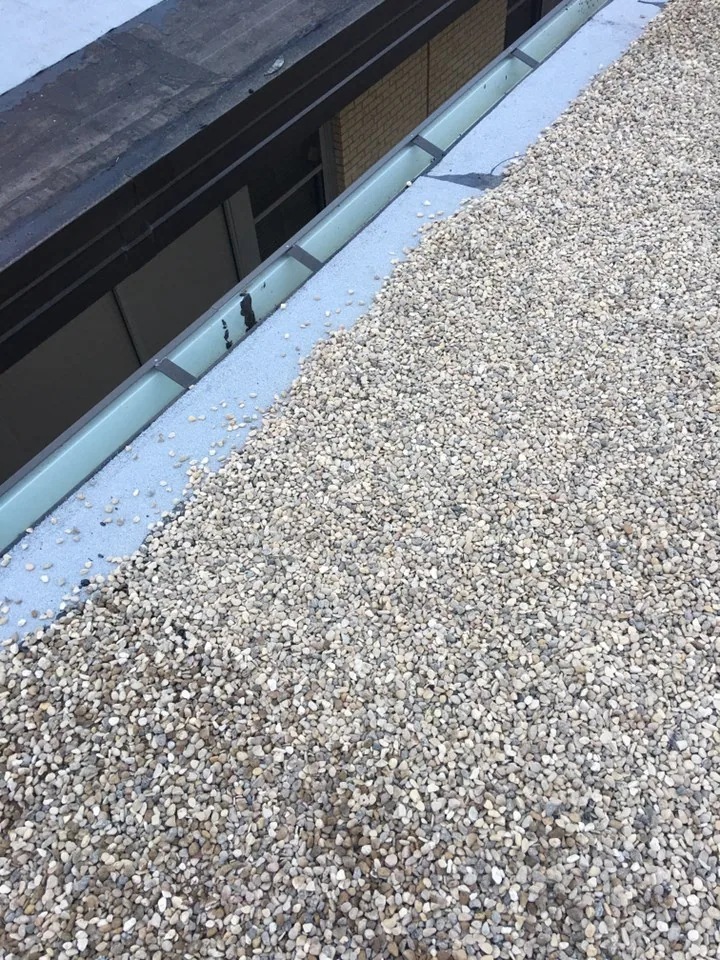
What supporting and drainage questions need resolution?
The deck, supporting layers and attachment form part of the specified roof assembly. Review their usable basis before retaining construction or selecting a new build-up. Our insulation and board assessment addresses preparation and finished geometry. A proposed new layer does not repair a supporting deficiency that has not been included in the scope.
Compare the intended build-up with outlet heights, equipment details and perimeter construction. Our drainage review identifies roof-side outlet work and related responsibilities. The director needs those enabling tasks alongside the layered installation. Where a revised height changes a detail, obtain the necessary information before procurement rather than leaving the connection to be improvised during application.
How should local conditions inform the work sequence?
Oceanside's cooler-season rain and marine-layer cloud provide scheduling context. Examine the actual roof for readiness against the selected product and installation requirements. Identify preparation that can proceed and the application that needs different conditions. Review the unfinished boundary and appropriate protection method before another stage relies on delayed work.
At an Ocean Ranch Corporate Center property, confirm actual receiving and affected-area instructions. For a Escondido facility, retain its own access and equipment calendar. The operator can coordinate both while keeping the roof methods and current site observations separate. Explain a changed period with the related facility task so personnel can make a useful adjustment.
What establishes a broader construction option?
Retention requires a review of the existing assembly, relevant condition and requirements for the proposed construction. Suitable samples contribute local information. Attachment, finished details and applicable project criteria also need consideration. A satisfactory observation at one opening does not by itself establish the suitability of every retained area.
Our retention review explains the necessary basis. Our replacement scope describes removal and complete rebuilding where appropriate. Compare the useful purpose and remaining questions for each option. Condition evidence, required construction and operator coordination should support the choice, rather than a fixed patch threshold or a presumed economic result based only on roof age.
Which requirements and records should accompany completion?
The layered work needs an identified project authority and a documented submission basis. Municipal review in Oceanside now uses the 2025 Title 24 codes following their January 2026 enforcement start. Establish the applicable energy provisions for the proposed alteration and retain the selected compliance method or relevant exception with the complete roof specification. Keep approved revisions with the relevant project documents where a concealed finding or detail change affects the final construction.
Retain layer and surfacing identification, installed locations and relevant checks with the completed boundary. Review manufacturer and workmanship coverage through its actual documents. The director needs a record of retained interfaces and any remaining task as well as the finished surface. Add later equipment changes at those references so subsequent examination starts with a usable account of the construction.
Arrange a practical reporting route for fresh damage or interior water observations. Record who can coordinate access to affected equipment and authorize suitable examination. The operator can then move from a reported concern to an assigned investigation without assuming that the layered roof or an earlier repair automatically identifies its source.
Commercial Roofing Questions
Does the surface identify every built-up layer?
Use available records and suitable authorized investigation where construction needs clarification. Accessible appearance contributes an observation. Retained-layer decisions need a usable basis for the actual assembly and relevant condition.
What should a local repair include?
Establish the defect and a suitable connection to adjoining materials. Describe preparation, compatible construction and surfacing as applicable. Keep the intended result and remaining examination questions visible to the director.
Do all built-up products use one application method?
Check the specified system and component instructions for the proposed construction. Review its particular requirements and controls. Coordinate affected operations before committing the relevant application period.
What changes when roof preparation is incomplete?
Identify the useful preparation task and the application requirement still unmet. Review the next opening and unfinished boundary with the appropriate protection method. Communicate the calendar consequence to the operator before another stage relies on the delayed task.
Which completion information supports later decisions?
Retain layers, surfacing, locations and relevant checks with approved changes and coverage documents. Add equipment alterations and service observations to that record. The next examination can then use known construction and the current operating arrangements.