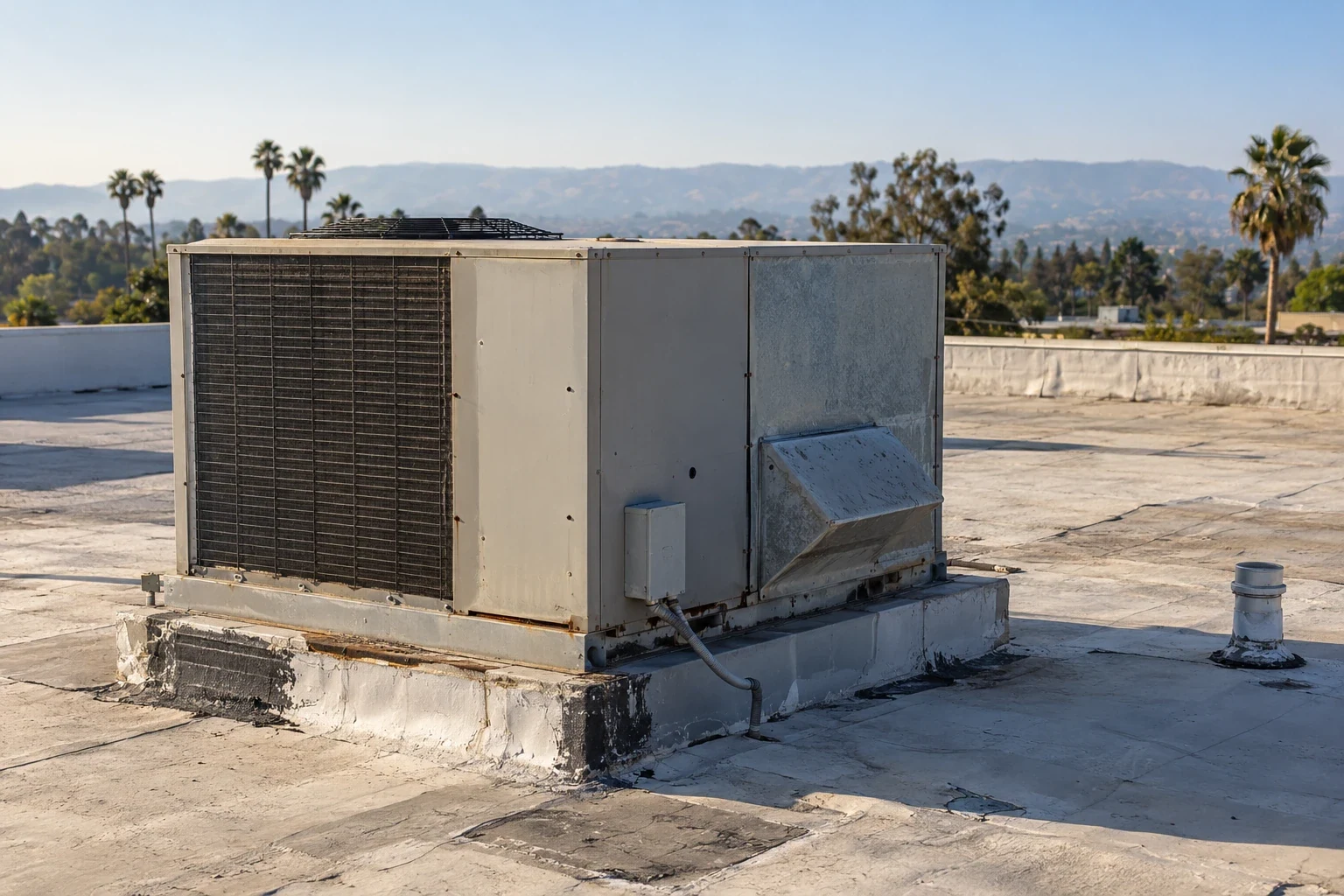
Which water-route questions affect the curb?
Examine outlets and accessible collection around the equipment area. The concern may require cleaning, detail repair or a measured geometry assessment. A cricket or tapered correction should fit the roof and intended discharge route. Its usefulness cannot be established from the curb's location alone.
Our drainage review identifies roof-side work and further plumbing or design questions. Equipment discharge also belongs with the responsible trade where relevant. A drip beneath a unit can involve different sources, so keep the entry question separate from a support or flashing defect until the examination establishes the correction. The director should see what each task resolves.
How are controls and operating periods arranged?
Equipment shutdown, intake or service arrangements need qualified personnel's review when the roofing sequence depends on them. Establish the method and planned interval with the responsible contacts. Improvised changes to operating equipment should not become part of the roof crew's routine protection plan. Fire, electrical and access systems also retain their own responsibilities where affected.
At an Ocean Ranch Corporate Center building, obtain the actual operator's equipment, receiving and affected-room information. A Vista property has separate arrangements. These details make the calendar usable: the director can see which task requires a planned restriction and which personnel must be available before the next phase proceeds.
What protection is needed during the change?
Removing a unit or altering a curb can expose part of the roof assembly. The sequence needs suitable materials, access and practical protection for that opening. Weather and concealed conditions can revise the task. Identify who authorizes a change and what information must reach that person before the roofing scope expands.
Marine-layer conditions and cool-season rain help frame scheduling, while actual surface readiness and product requirements govern application. A phased occupied plan can connect the working area with the use below. Keep temporary measures and reassessment needs distinct from permanent closure. The director then has a clear account of exposure and remaining work instead of a fixed promise that every equipment change closes identically by evening.
What should be retained at turnover?
Photograph supporting corrections and preparation where appropriate before the interface is concealed. Retain the roof materials, completed locations and relevant checks. The equipment team supplies its respective completion records, keeping the combined handoff understandable without treating one trade's finished task as acceptance of every connected system.
Add later equipment alterations and service changes to the same roof history. Actual manufacturer and workmanship documents govern coverage and upkeep requirements for their work. A future examination can then compare a new concern with the identified interface and assembly. The director receives a practical construction record, useful for assigning the next investigation to the right personnel.
Commercial Roofing Questions
Can a replacement unit use the existing curb?
Review the proposed equipment requirements, existing construction and interface dimensions with the responsible professionals. A similar footprint alone does not settle suitability. The roofing scope then identifies the connection required by the arrangement established for this project.
Who approves support or loading changes?
Qualified design personnel evaluate those requirements where needed. Roof examination contributes accessible findings. The project should assign the review and required information before the new unit or attachment relies on retained construction.
How should controls enter the calendar?
Responsible personnel establish the method and interval for equipment or building systems affected by the work. The roof sequence identifies those dependencies. Keep the contact and required readiness check with the phase before it proceeds.
What happens if removal reveals another concern?
Locate and document the finding, explain its scope effect and follow the authorization process. Review practical protection and the next task with the facility director. Related trades need the current boundary before continuing from the earlier plan.
What helps when a later drip is reported?
Retain roof and equipment completion records at the same interface reference. Add subsequent service or alterations. The next examination can then compare the observation with the actual work and select the relevant roof or equipment task.