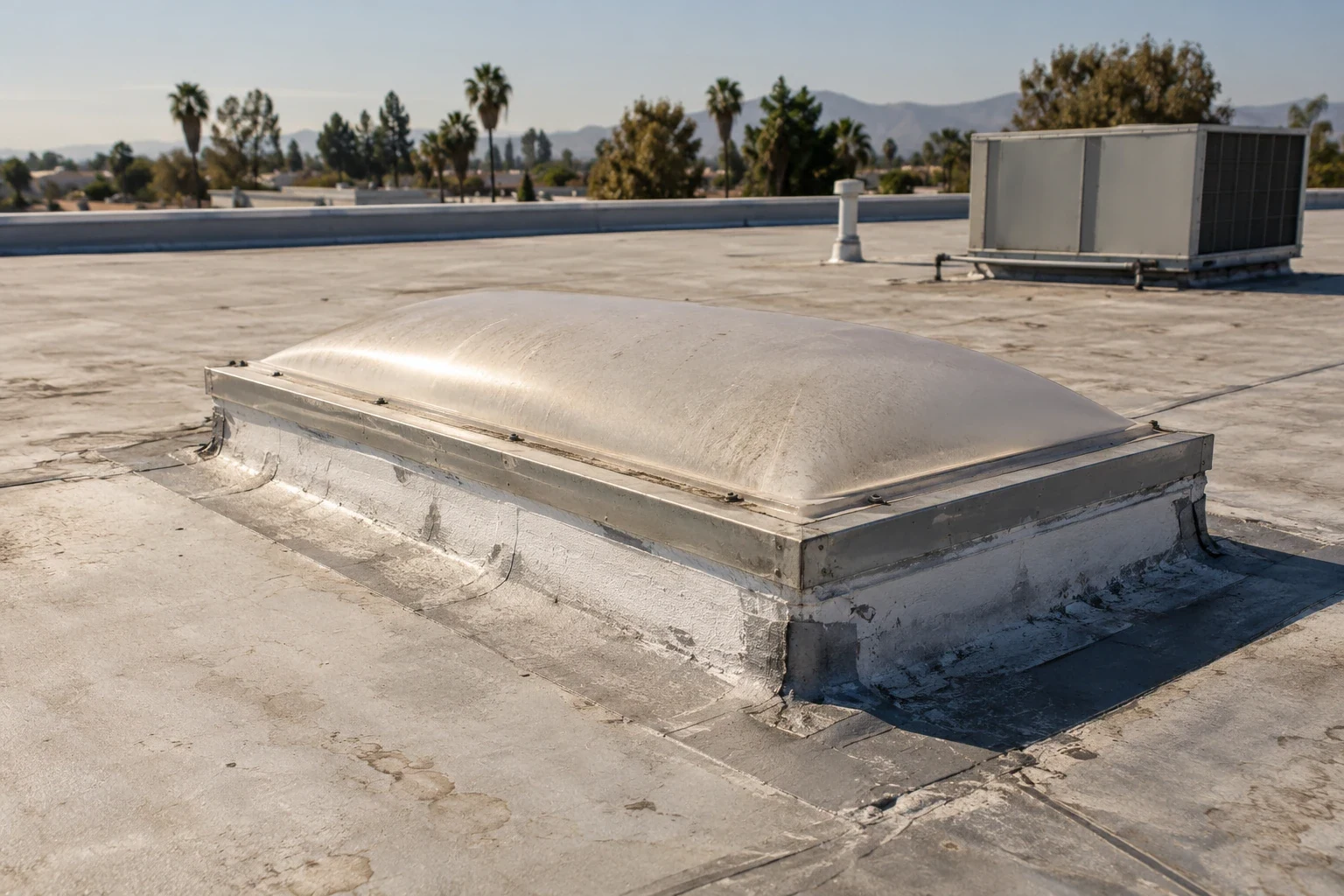
When does supporting material need another task?
A failed connection can raise questions about insulation or deck condition nearby. Suitable authorized investigation establishes evidence within its coverage. Sample findings remain local, while thermal screening needs interpretation and confirmation. If the result leaves extent unresolved, identify further checking before quantities become accepted removal.
Our supporting-layer scope defines rebuilding justified by the findings. Drainage around the curb may also need measurement or design assessment, particularly where another layer changes the surface. The proposal should show those tasks as parts of the complete interface. A finished flashing cannot substitute for an unresolved supporting or water-route concern beneath it.
How are equipment operations coordinated?
Mechanical, electrical and other equipment tasks need responsible personnel's review when roofing affects the unit or its controls. Establish the planned interval and supporting work before removal or rebuilding depends on it. HVAC intake arrangements require a suitable method coordinated with qualified personnel, rather than an improvised cover placed on operating equipment.
Our curb interface planning assigns roof responsibilities alongside relevant trade work. At an Ocean Ranch Corporate Center property, confirm the affected rooms, receiving and service contacts with the actual operator. The work calendar then identifies the necessary interruption or restriction and the task needed before the next roof phase can proceed.
What does the application period require?
Current surface moisture, temperature and the selected product instructions determine readiness. Marine-layer low cloud can affect a planned coastal period, while cooler-season rain influences advance scheduling. Preparation, joining and cure may have different requirements. The sequence should identify useful work and the next period needed where conditions prevent application.
At a property near Oceanside Harbor, obtain tenant routes and material delivery arrangements from the operator. Access equipment and protection for spaces below need to fit the method. If a hidden finding changes the work, record its location and scope effect for authorization. Related personnel should receive the revised task before continuing from the original calendar.
What should be retained at completion?
Photograph preparation and supporting corrections where appropriate before the finished detail conceals them. Keep material identification, completed locations and relevant checks with the work record. Another trade's completed task should be retained beside the roof interface it affects. Any unresolved component needs a named next action in the handoff.
A maintenance visit can compare accessible connections and note later equipment changes. Actual manufacturer and workmanship documents govern their respective terms, with reporting and upkeep requirements kept for the corresponding work. The facility director then has a clear construction history for evaluating a new drip or deciding which interface needs another examination.
Commercial Roofing Questions
Does a skylight-adjacent stain prove the frame leaked?
Compare the observation with accessible roof and frame conditions, since concealed components can carry water from another location. Suitable examination establishes the useful correction. Keep confirmed damage and suspected route distinct while the next task is assigned.
What should be coordinated before curb adjustment?
Measure the proposed roof relationship and identify equipment or skylight work that must precede flashing. Responsible personnel establish those tasks and available interval. The roofing sequence should show the dependency before procurement or opening.
How does the material choice affect repair?
The existing assembly and selected products govern compatibility and preparation. Identify the procedure and relevant checks for that connection. A generic treatment should not replace the detail required by the actual roof system.
When should another investigation be authorized?
Arrange it when concealed condition or an unresolved source affects the proposed scope. State the method, purpose and coverage with suitable permissions. The director can then review the evidence before extending a local finding into wider construction quantities.
What makes a later inspection more useful?
Retain the completed detail, supporting work and related trade records at consistent locations. Add equipment alterations and new observations. A later examination can compare the current concern with the connection actually delivered.