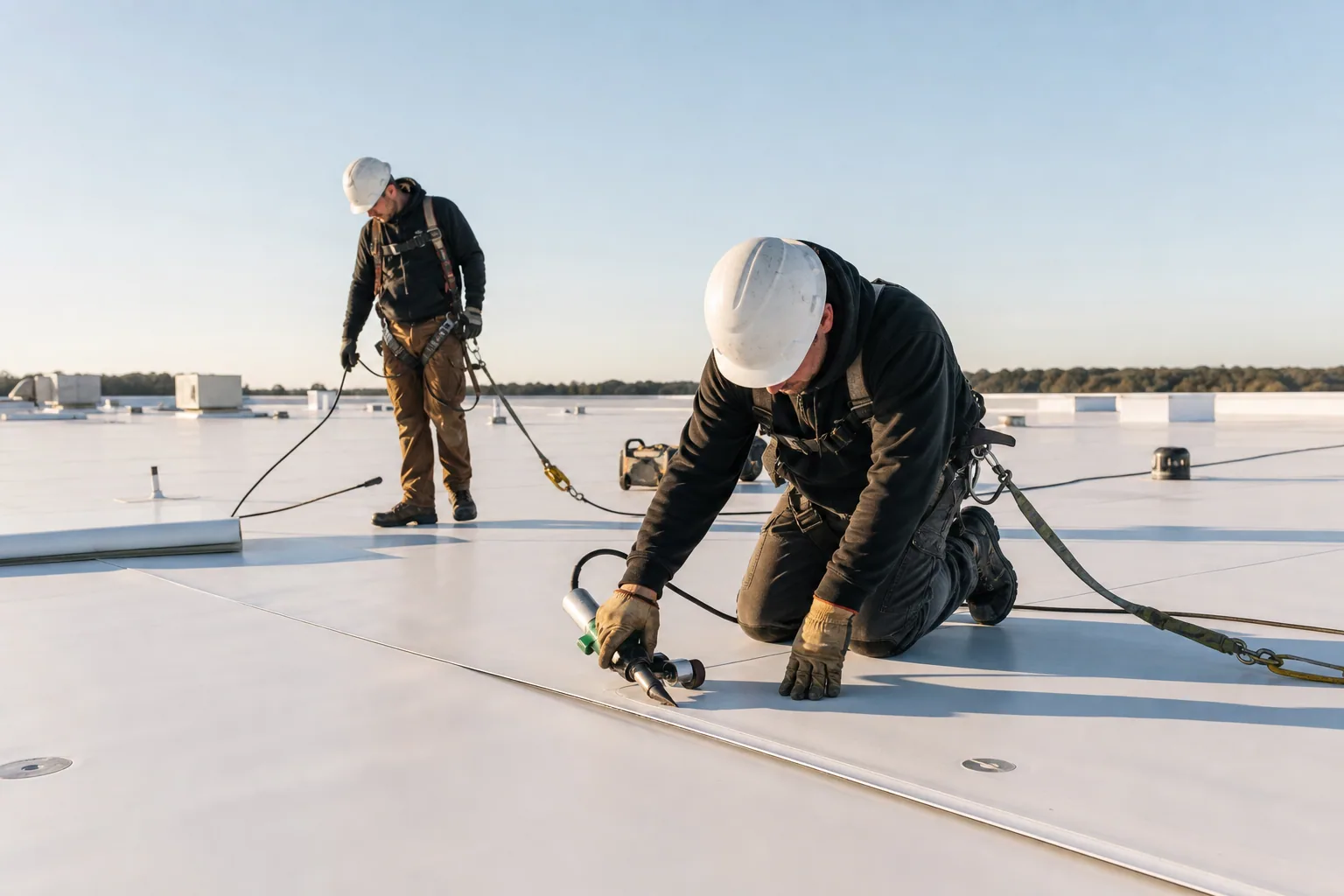
What changes at outlets and equipment?
Added layers raise the roof surface and can change relationships at drains, curbs, walls and edges. Measure those interfaces and identify required adjustment. A drainage concern may need further geometry or plumbing assessment. The proposed assembly should show how water reaches its intended discharge route after the surface level changes.
Our outlet coordination distinguishes roof-side work from other responsibilities. Equipment curb work may require relevant trade input before flashing can finish. The calendar assigns those tasks to the phase they affect. A recover can retain much of the field while still needing substantial interface correction, so the owner should see those quantities before choosing the option.
Which preparation tasks affect occupied work?
Local removal, fastening, cleaning and detail rebuilding can affect areas below even where broad tear-off is avoided. The existing roof does not provide an assurance that every phase is free of open-roof exposure. The sequence identifies the task, protection and related operating arrangements for each working area.
At a Rancho Del Oro property, the operator supplies affected rooms, access and receiving periods. At Ocean Ranch Corporate Center, obtain the actual building's arrangements rather than a common business-park schedule. Qualified personnel review equipment and air-handling precautions where affected. Those dependencies remain assigned before the roof sequence relies on them.
How is the application period established?
The selected products prescribe readiness, joining and cure requirements for their substrates. Actual moisture, temperature and weather influence that period. Marine-layer conditions can change the available window, while Santa Ana weather requires review of access and handling. Preparation is not automatically suitable in every damp period simply because field application is planned later.
Our occupied construction plan identifies manageable working limits and practical closure. Conditions or hidden findings may revise them. Record the change and next authorization, keeping the facility contact informed about affected areas. Related trades need the revised boundary and task before continuing from the earlier plan. Keep the supporting information with the change so the owner can review its effect on materials, access and timing together. That handoff is especially useful where a limited operating interval depends on several tasks being ready. That gives the calendar a reliable decision process without a blanket promise of identical nightly closure or uninterrupted activity in every room.
What should be compared before approval?
A replacement alternative has different removal and retained-construction consequences. Compare both scopes on the same condition basis, including preparation, supporting work, details and operating provisions. The owner needs to know what each approach resolves and what remains for later assessment. A recover is not automatically the least expensive complete correction.
At turnover, document the retained layers and new assembly with usable locations and completion records. Actual coverage documents govern their terms and upkeep obligations. Add later changes to the roof history, so the next examination can understand what remains concealed. The facility director then has a record that supports future repair planning as well as the decision made for this project.
Commercial Roofing Questions
Can a roof with earlier leaks be recovered?
Examine the current assembly and the extent supported by suitable investigation. Local concerns may be correctable, while another condition can make retention unsuitable. The recommendation should explain the findings and applicable requirements before choosing the approach.
What does added weight require?
Review the proposed materials and supporting construction with the appropriate qualified professionals where evaluation is needed. The assembly needs a suitable basis. Keep that task in the scope before procurement assumes the existing structure accepts the change.
Do all curbs need the same adjustment?
Measure the relationships created by the selected new layers. Some interfaces may require rebuilding or equipment work, with responsibilities assigned. The proposal should identify actual changes rather than attach a universal lift instruction to every rooftop unit.
How should surface moisture affect preparation?
Use product requirements and current conditions for each task. A recover still needs a suitable receiving surface and practical protection at working areas. The calendar identifies what can proceed and which application needs another period.
What is useful for the eventual next reroof?
Record the retained layers, added construction, attachment and completed detail locations. Keep approved changes with that file. A later proposal can then assess the actual assembly rather than rediscovering what the recover left beneath its surface.