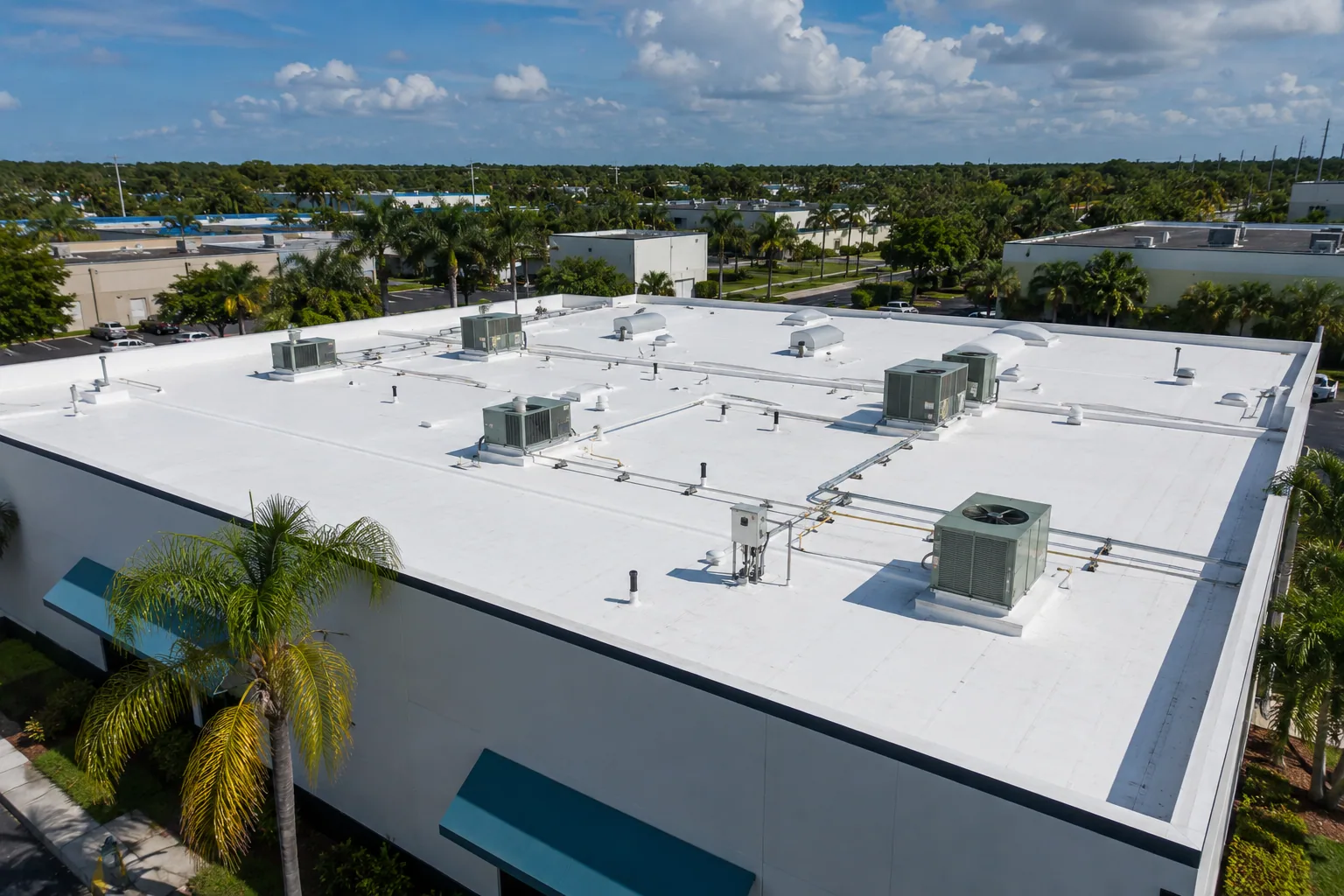
How is the reflective system chosen?
A suitable TPO membrane assembly or another roof system may fit a particular scope. Product and component requirements govern the installation. If coating is proposed, evaluate the receiving material, preparation and service conditions. The comparison should identify those items rather than treat all reflective finishes as interchangeable.
Equipment discharge and roof traffic may require product-specific review and protection. Available records help identify existing materials; suitable investigation addresses concealed questions where the decision depends on them. Keep confirmed findings and suspected extent separate. The director sees the basis for selecting a material and the next check where compatibility or supporting condition remains unresolved.
What must fit around the new surface?
Drains, curbs, edges and wall connections need a workable relationship with the finished assembly. New thickness can change outlet levels and usable flashing height. Measure the relevant interfaces and identify required adjustment. A coating cannot change slope, while an added layer needs the geometry reviewed before the details are installed.
Our drainage coordination and flashing work make those supporting tasks visible. At an Ocean Ranch Corporate Center property, obtain equipment and receiving requirements from the actual operator. The field material and surrounding work then enter the price together, giving the director a useful comparison rather than a finish-only allowance.
How should the facility period follow product readiness?
Current surface moisture, temperature and weather influence application under the selected system's instructions. Preparation, joining and cure may require different arrangements. Marine-layer low cloud can change a coastal period, while cooler-season rain informs advance planning. The calendar identifies what can proceed and which task needs another interval.
At a Rancho Del Oro property, confirm occupied rooms, access and the necessary personnel before setting the sequence. Responsible qualified staff review equipment or air-handling controls where affected. Include protection and restrictions for the actual method, with a procedure for revising the section when weather or concealed conditions change the useful next action.
What should remain with the completed roof?
Retain installed products, supporting layers, relevant performance documents and completed detail locations. Photograph preparation where it explains concealed work, and keep approved changes with appropriate checks. Actual manufacturer and contractor documents establish coverage and upkeep terms. The construction file should make the selected assembly understandable to a later reviewer. Keep the project basis with the material records so a future alteration can be reviewed against what was actually installed. Where product substitutions were approved, identify the change and relevant supporting information. The director then has more than a finish description: the file connects the assembly, its required performance and the work completed at the details. That account is useful when another trade proposes equipment changes or a new roof allowance is considered.
A maintenance scope can examine accessible drainage, surface changes and service-area damage. Product-specific cleaning or repair requirements guide agreed tasks. Add later equipment alterations and new findings at the same references. The director can then evaluate the next expenditure from the known system and current condition, rather than relying on the color seen from a nearby building.
Commercial Roofing Questions
Does a cool roof always mean coating the existing surface?
The project may use a membrane assembly or suitable restoration system. Establish the actual work and receiving condition first. The proposal should explain supporting corrections and applicable requirements before the reflective finish is chosen.
Can a product rating predict our electricity bill?
Building performance also involves insulation, equipment and operation. A fixed saving needs an appropriate project assessment rather than an inference from surface color. Keep the intended roof function and any performance evaluation clearly defined in the scope.
Do all projects use the same reflective threshold?
Review the actual building and work under the applicable provisions, including relevant approaches or exceptions. Required ratings and documentation belong with the selected assembly. A single number should not become a universal specification.
What should be resolved before application is scheduled?
Establish suitable receiving construction, product readiness and related trade tasks. Coordinate affected spaces and controls with responsible personnel. The calendar then shows the work that can proceed and the interval needed for anything not ready.
What helps future maintenance?
Keep product identification, completed locations, performance documents where relevant and actual coverage terms. Add trade changes and inspection findings. A later correction can then use the installed system’s requirements and evidence from the building.